°
°
Dakshin Bengaluru Meetup
The identity, comms and collateral that turned a research convening into a working room.
For the Dakshin Bengaluru Meetup, we designed the whole visible surface of the convening, so a one-day exchange between communities and domain experts could behave like the start of something, not the end of an afternoon.
What we delivered
A wordmark, terracotta world and illustrated neighbourhood that let a one-day convening read as one coherent thing.
A ticket-shaped form capturing each community’s theme, offer and urgent need, so a need and an expert could meet on shared terms.
Theme-driven and bilingual rather than bespoke to one guest list, so the organisers can re-run it as a re-print, not a re-design.
Make something survive the room
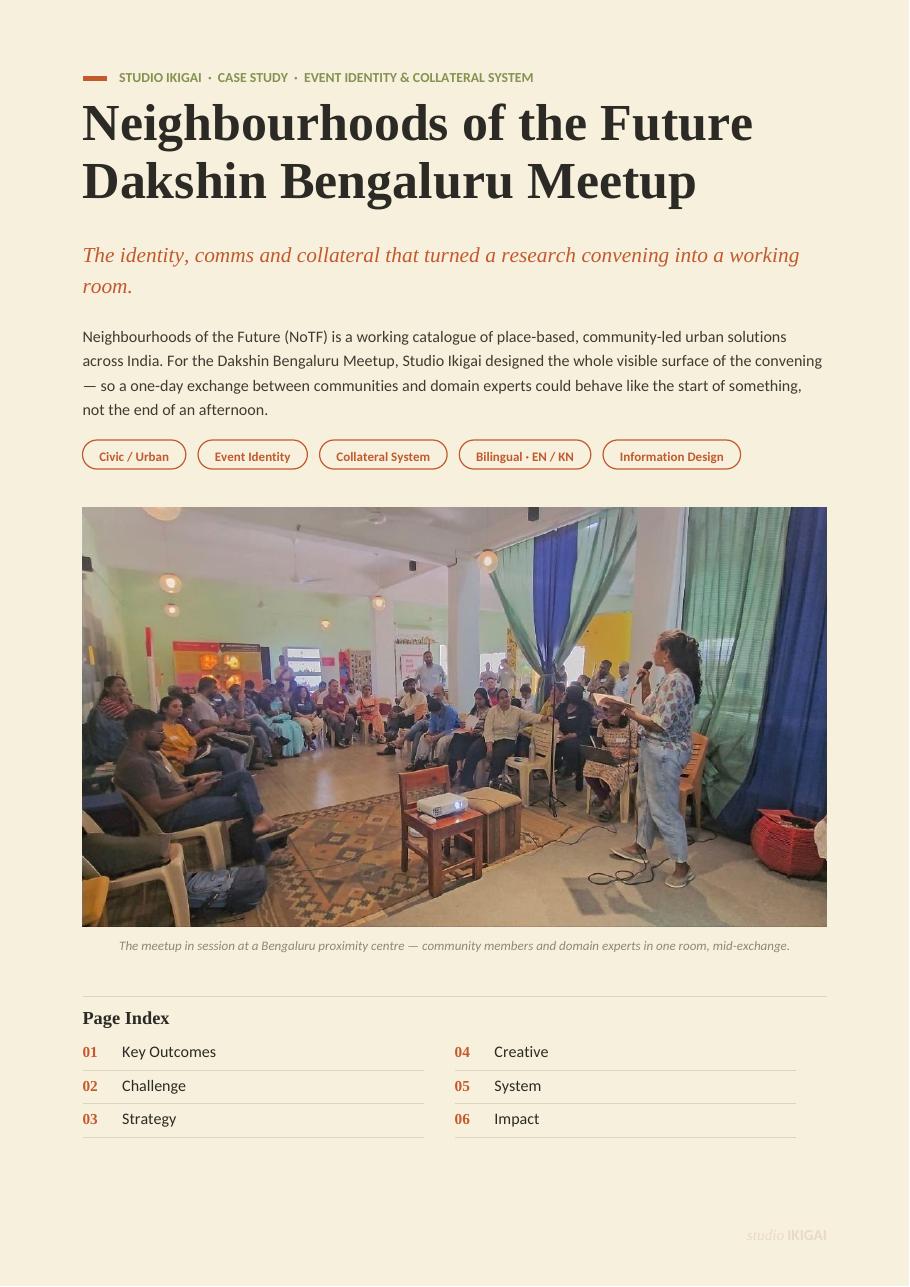
NoTF’s premise is simple and hard: the people who can help a neighbourhood already exist, they just don’t meet. The meetup put resident groups in one room with experts in mobility, water, waste and planning, and gave them a short window to find each other. A speed-exchange only works if both sides can be read quickly, and if something survives the room, instead of the usual failure: warm conversation, no record, nothing to act on by Monday.
Design the exchange, not the event
The strategic call was to treat the collateral as the facilitation, not decoration around it. Every piece had one job: move a person from “I’m here” to “here’s what I need, and here’s how I follow up.” Working in the eight NoTF themes throughout meant the standee, the form and the catalogue spoke one language, and the whole thing had to be bilingual, because a South Bengaluru convening that only works in English excludes the communities it is for.
Design the exchange, not just the event, and make sure everyone leaves carrying a way back in.
A ticket you tear and keep
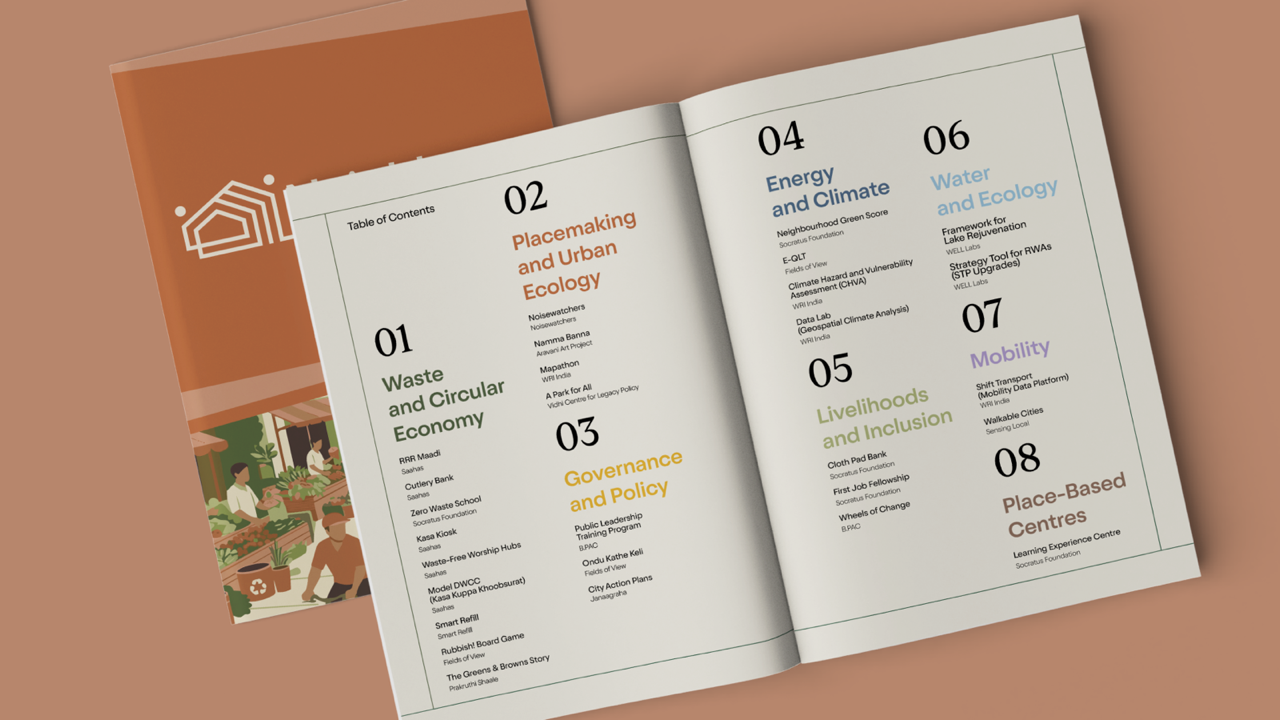
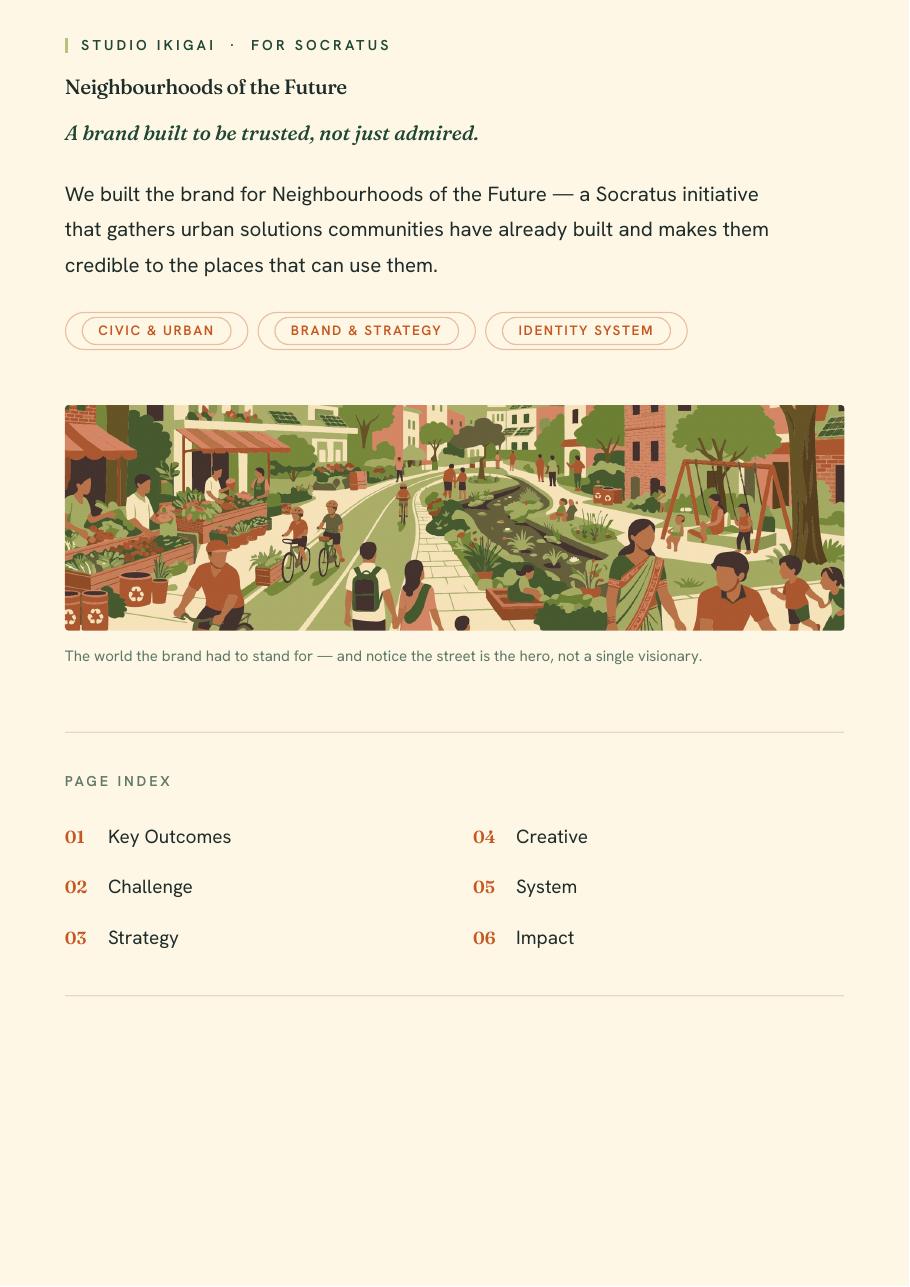
The system shares one visual world: the NoTF terracotta, the split Neighbour / hoods wordmark, and an illustrated neighbourhood holding the market, the cycle lane, the compost and the rewilded drain in one frame. The standee fixes the format in plain language. On the table sits a ticket-form: each community states its theme, what it can offer and its urgent need, then tears along the perforation and keeps a stub with a QR back into the platform, so the exchange leaves the room as a recorded entry, not a memory.
Legible, recorded, repeatable
The honest measure of event design isn’t applause in the room, it is whether anything survives it. A stranger understood the format from the standee before being briefed. Every exchange left a structured ticket instead of an unrecorded conversation. And the theme-driven, bilingual system can be re-run elsewhere without commissioning new work. The organisers have already pointed at running it again in the east of the city.
These conversations were a kind of speed-exchange of needs and possibilities as the two groups met each other. Serendipitous discoveries of new possibilities were happening.Ashwin Mahesh, on the Neighbourhoods of the Future convening